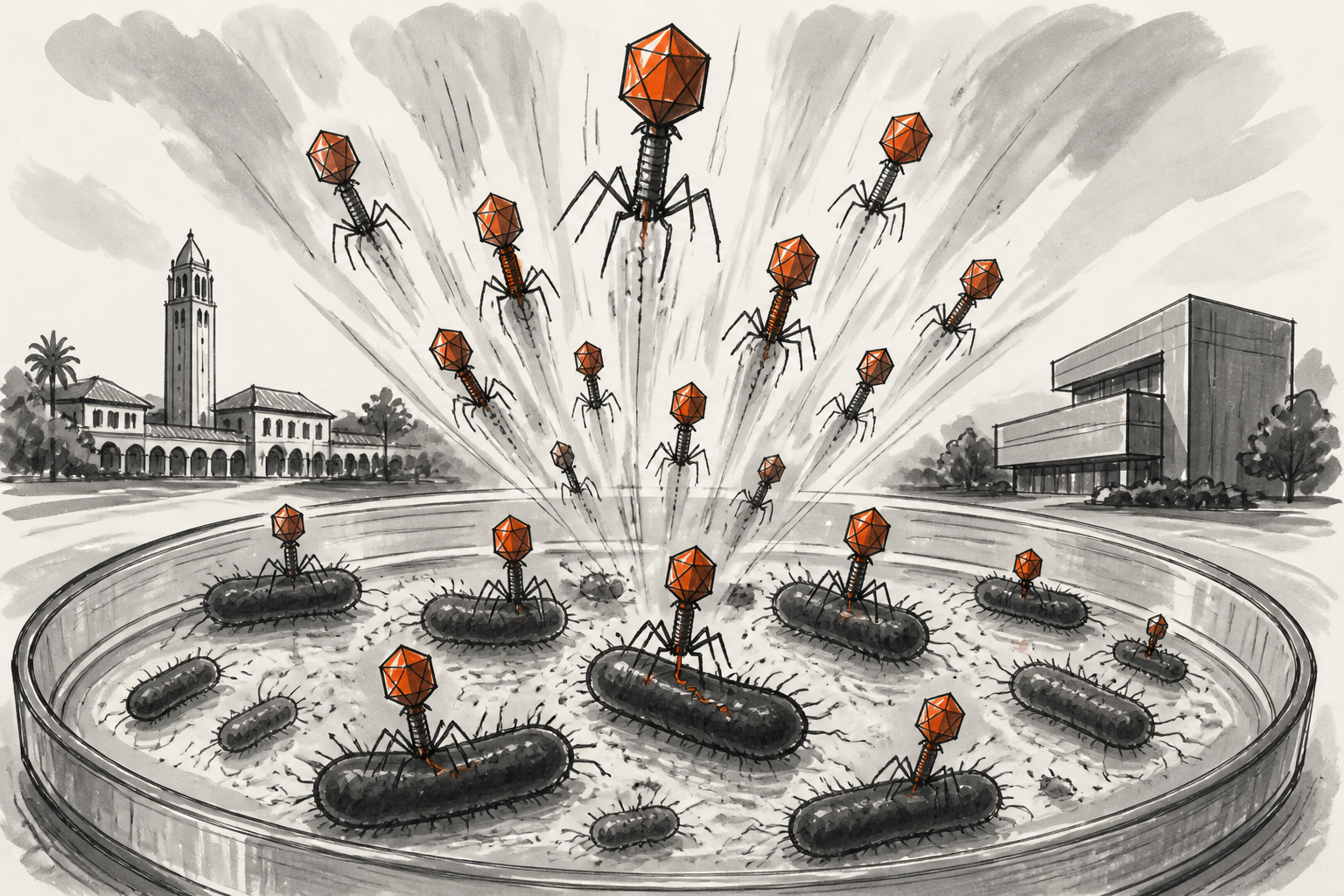
In what researchers describe as the first successful use of artificial intelligence to design complete viral genomes, scientists at Stanford University and the Arc Institute have generated 16 functional bacteriophages that do not exist in nature—a milestone that could reshape efforts to combat drug-resistant bacteria even as it intensifies biosecurity concerns.
Continue reading
The rest of this article is for AI News Blitz readers. Choose an option below to keep reading.
Already purchased? Sign in✓ Signed in — this article isn’t included in your current plan.
Unlocking the full article...
Contact us
Questions, corrections, or ideas? Send us a message here. We aim to reply by email within 24 hours.
Thank you. Your message has been sent. We aim to reply by email within 24 hours.Please enter your email address and a message.We could not send your message. Please try again in a little while.